Combat Design: How to Make a Fight Feel Good
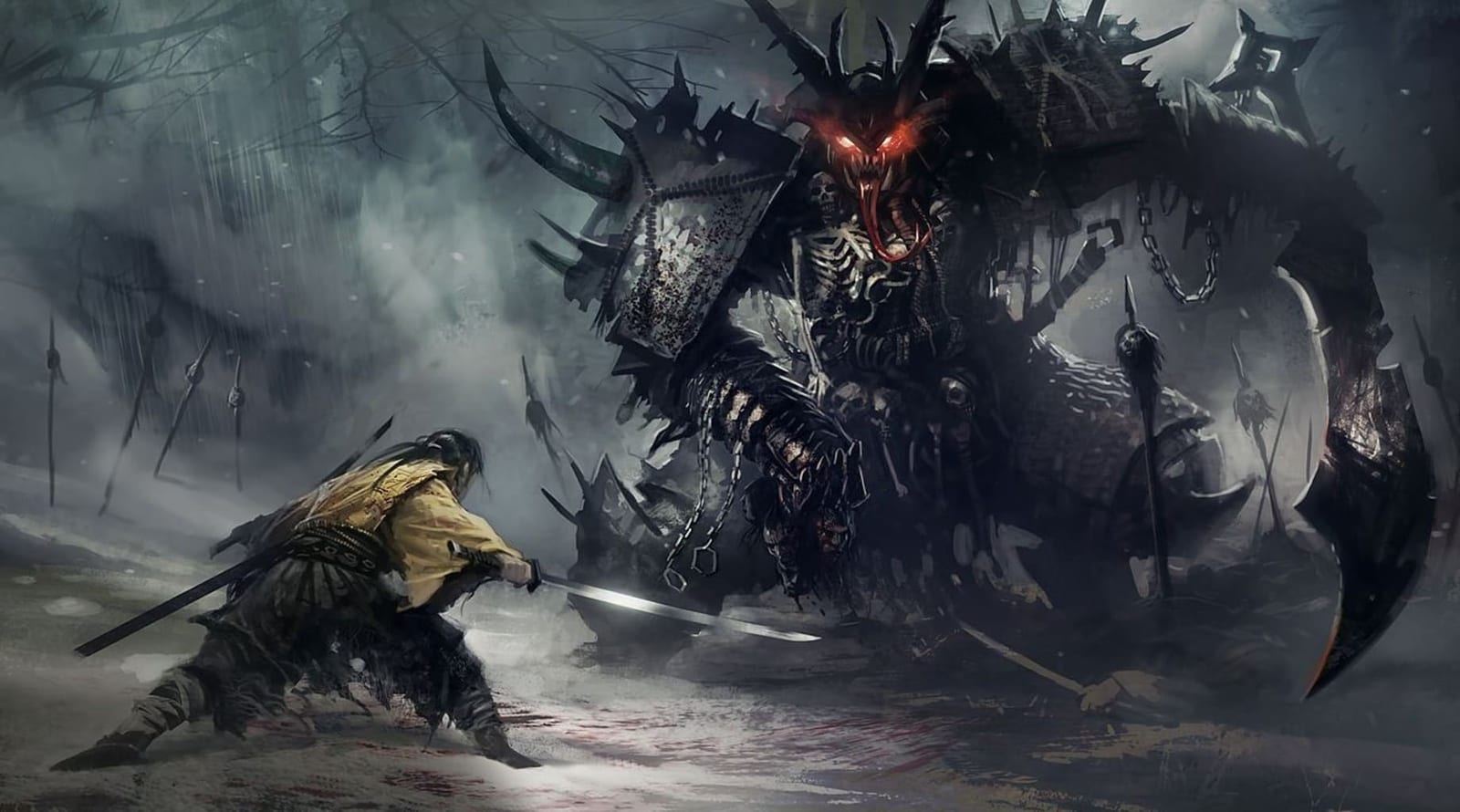
Combat is one of the most important mechanics in games. Some games don’t even have combat and still become huge hits — but if your game does have combat, it can go two ways. It can carry the whole experience, or it can quietly ruin it. Combat is a double-edged sword.
Here’s the idea I want you to keep in mind for the whole post, because everything else hangs off it:
Combat is a conversation between the player and the game. The player gives an input (a swing, a shot, a dodge), and the game answers back through many channels at once — animation, sound, camera, controller rumble, damage numbers, and the enemy’s reaction. The player feels that answer. Good combat is a good conversation. Bad combat is the game not answering.
Almost every section below is really about one of those answer channels. First person, third person, weapons, enemy reactions, effects — they’re all different ways the game talks back to the player. So let’s go through them one by one and, at the end of each, pull out one rule you can actually use.
Why we fight (the meaning of combat)
Before we talk about how combat feels, ask a simpler question: why is the player fighting at all?
In games there are many reasons to enter combat, and I don’t just mean the story reason. I mean the reason the player enjoys it. Is it hard to beat these monsters, so beating them feels earned? Do you need this fight to push the quest forward? If you die, do you lose something, or is it just for fun? The player needs a reason to step in. It can be loot, XP for the effort, a new storyline (or changing the main one), or just chaining a big combo for a high score.
Really, it comes down to one thing: how are you going to give the player the motivation to fight? Your game doesn’t have to be combat-heavy. But if the combat is good, it leaves a sweet taste in the player’s mouth — and they’ll come back for more.
Designer takeaway: Combat needs a why. Decide what the player gains (loot, story, mastery, points) before you polish how it feels.
What “game feel” actually means
The thing you feel when a hit lands — that satisfying crunch — has a name. Designers call it game feel (or sometimes “juice”). It’s the layer of feedback that makes a simple button press feel physical and alive. There’s even a whole book about it, Game Feel by Steve Swink, if you want to go deep.
Game feel is almost never one big thing. It’s a stack of tiny things happening at the exact same moment: the animation, a screen shake, a punchy sound, maybe the game freezing for a split second on impact. Alone, each is nothing. Together, they turn “the number went down” into “I hit that thing hard.” Keep this in mind as we go — most of combat design is just adding the right small answers to the player’s actions.
Feeling the combat in first person
In first-person combat, the player never sees their own character, so the weapon has to carry the feeling. Is it a big sword or a pistol? If it’s a heavy sword, slow the player’s movement down a little so the weight comes through. If it’s a light pistol, give them more mobility. A rifle can shake when it fires.
You don’t have to be realistic about it. You have to be enjoyable. For example, you could make a huge chunky weapon that “should” be hard to carry — but let the player move fast and fire it rapidly and wipe out a whole enemy team with it. That’s not realistic at all, but if it’s fun, it’s good design. Just watch the difficulty: a weapon like that can’t make killing trivial. If it does, save it as an end-game weapon for the final levels, so it feels like a reward.
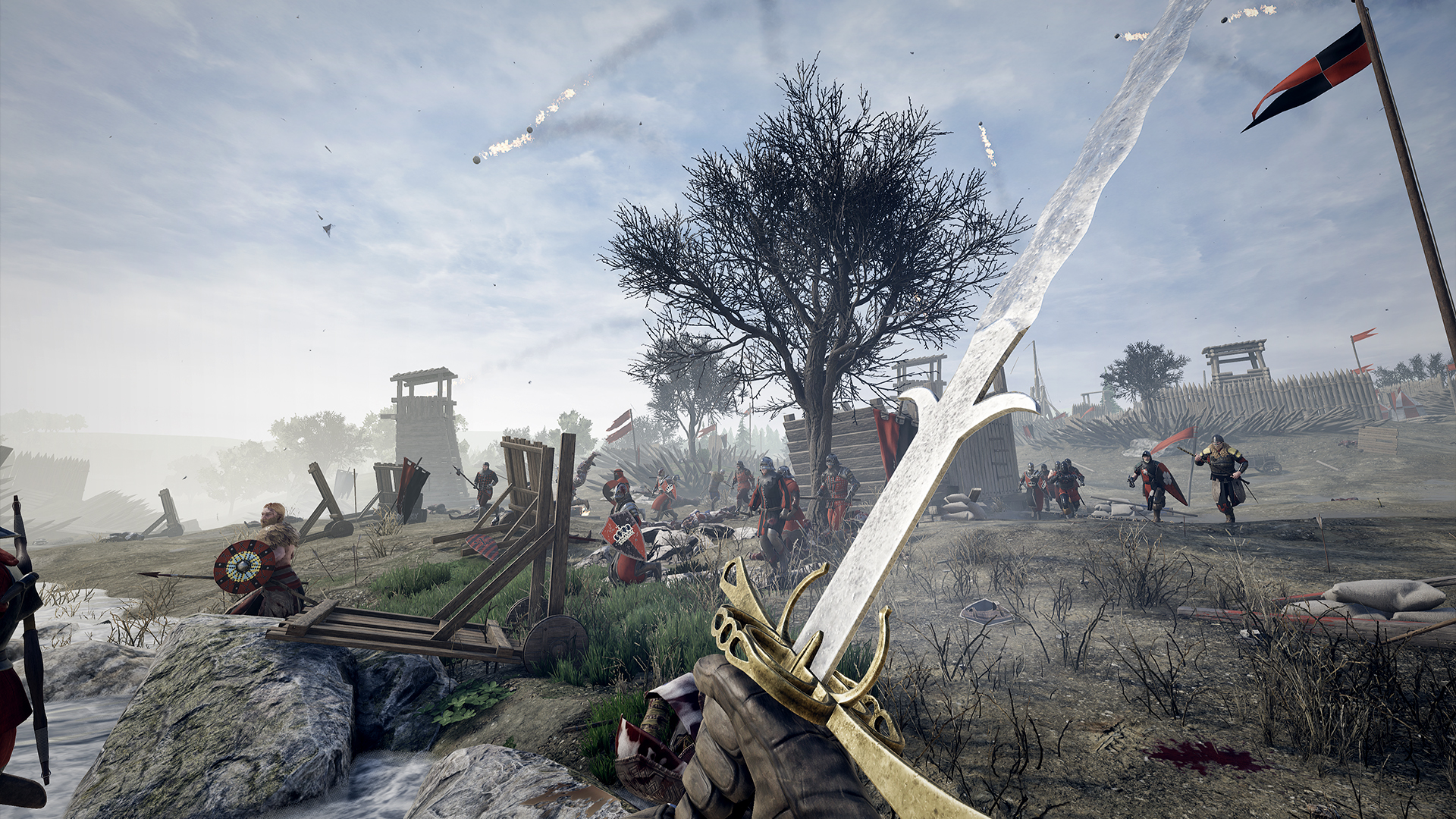
The best example of first-person melee feel is Mordhau. If you’ve played it, you know how it works: you move with WASD and attack and defend with the mouse. Simple. So why is it so satisfying? Because you control where your attack comes from. Move the mouse left and swing, and the strike comes from the left. Move up, and it’s an overhead slash. Press mouse 3 and it becomes a stab.
But there’s always a catch, and the catch is where the depth lives. In Mordhau, if you and your enemy both attack from the same angle at the right moment, your swords clash in the middle — this is called chambering. Block an attack and immediately press attack again, and you fire back a fast, no-delay counter — that’s a riposte. You can also start a swing and cancel it into defense, or change its direction mid-swing, to trick your opponent — those are feints and morphs. On top of all that, the screen shakes when you get hit, and you can feel the camera drift in the direction of your own swing. These are tiny touches, but they’re most of the reason the combat feels alive.
Designer takeaway: In first person, sell the weapon through movement, camera, and screen shake — and give one “catch” mechanic (like chambering or riposte) so mastery has somewhere to grow.
Feeling the combat in third person
Now the camera can see your character, but the core idea doesn’t change — everything you could do with the first-person camera, you can still do here, plus more.
Third person opens up a more tactical feeling. Placed well, the camera makes attacks more readable and lets the player understand the space they’re in, which is great for stealth and strategy. (You can do stealth in first person too, and when it’s done right it looks like Dishonored — but a wider view makes reading your position easier.)
There’s another reason third person matters for combat: character customization. When players can change their outfit and see their weapons on their own character, they get a “this is my character, this is my build” feeling that pulls them into the game. Why bring up outfits in a combat post? Because seeing your character move — watching your own skills play out in full view — makes the whole fight more expressive and more yours.
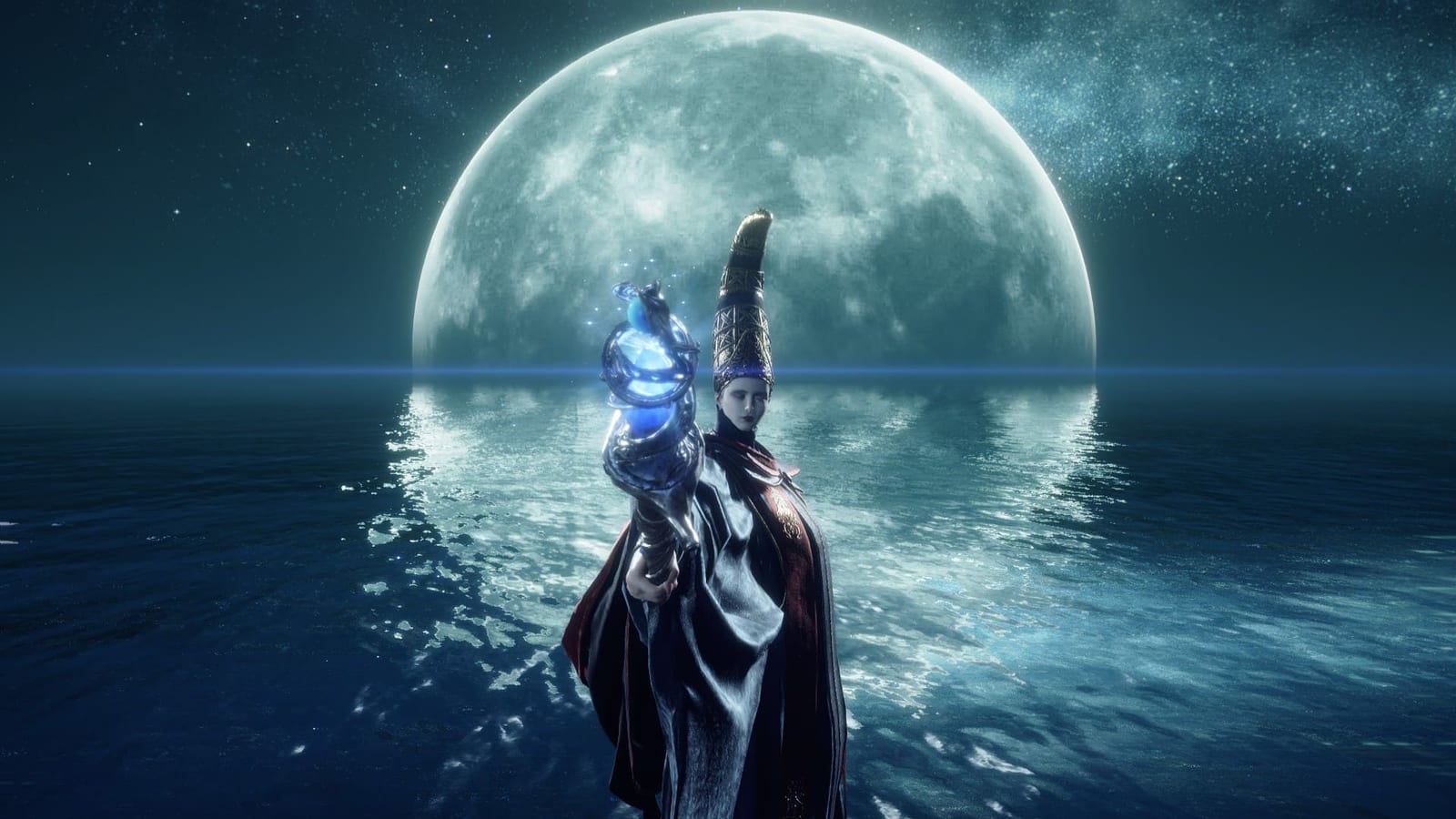
Elden Ring is one of the best at this. You can see and feel every attack through the character’s movement. It’s not perfect, though — in tight spaces against huge bosses, the camera can swing to a bad angle and get in your way. That camera problem is a real design lesson: a third-person camera is a feature and a risk.
Designer takeaway: In third person, use the wide view for readability and self-expression — but test your camera in the worst case (big enemy, small room), because that’s where it breaks.
Weapons in combat
Weapons are the most powerful thing a player carries — from a bare fist to a laser gun that clears the room. Some games chase realism; others invent something new. Either way, a single weapon decision changes a lot: a rifle’s damage, its accuracy, how its bullets behave.
Red Dead Redemption 2 nailed its gunplay. Every ranged weapon has a small aiming circle — a reticle — and when you stand still and focus, the circle shrinks and your accuracy goes up. That shrinking circle is called spread (or bloom), and it’s a quiet genius move: it turns “aim better” into something the player can literally see happening on screen. The feedback is instant and honest.
A weapon should also have an identity. Weight, fire rate, sound, and recoil should tell the player what kind of tool they’re holding before they even read the stats. A shotgun and a sniper shouldn’t just deal different damage — they should feel like different objects.
Designer takeaway: Give every weapon a clear identity through weight, sound, and recoil, and show accuracy changes on screen (like reticle spread) instead of hiding them in numbers.
Feeling the combat on the enemy
Think about punching a sandbag that doesn’t move — no matter what you do, it just hangs there. Now imagine an enemy like that: you attack, and it just stares at you with a blank face and keeps swinging like nothing happened. That’s exactly what we don’t want.
Enemies need to react. When you hit them, they should flinch, stagger, block, or get knocked back — anything that says “I’m a living thing and that hurt.” These reactions have names: a hit reaction or flinch is the enemy’s response to being hit, knockback pushes them away, and hitstop is a tiny freeze at the moment of impact that makes the blow land with weight. Elden Ring does this on a godly level — an enemy can keep attacking, but you can see them jiggle or interrupt their swing when your blade connects.
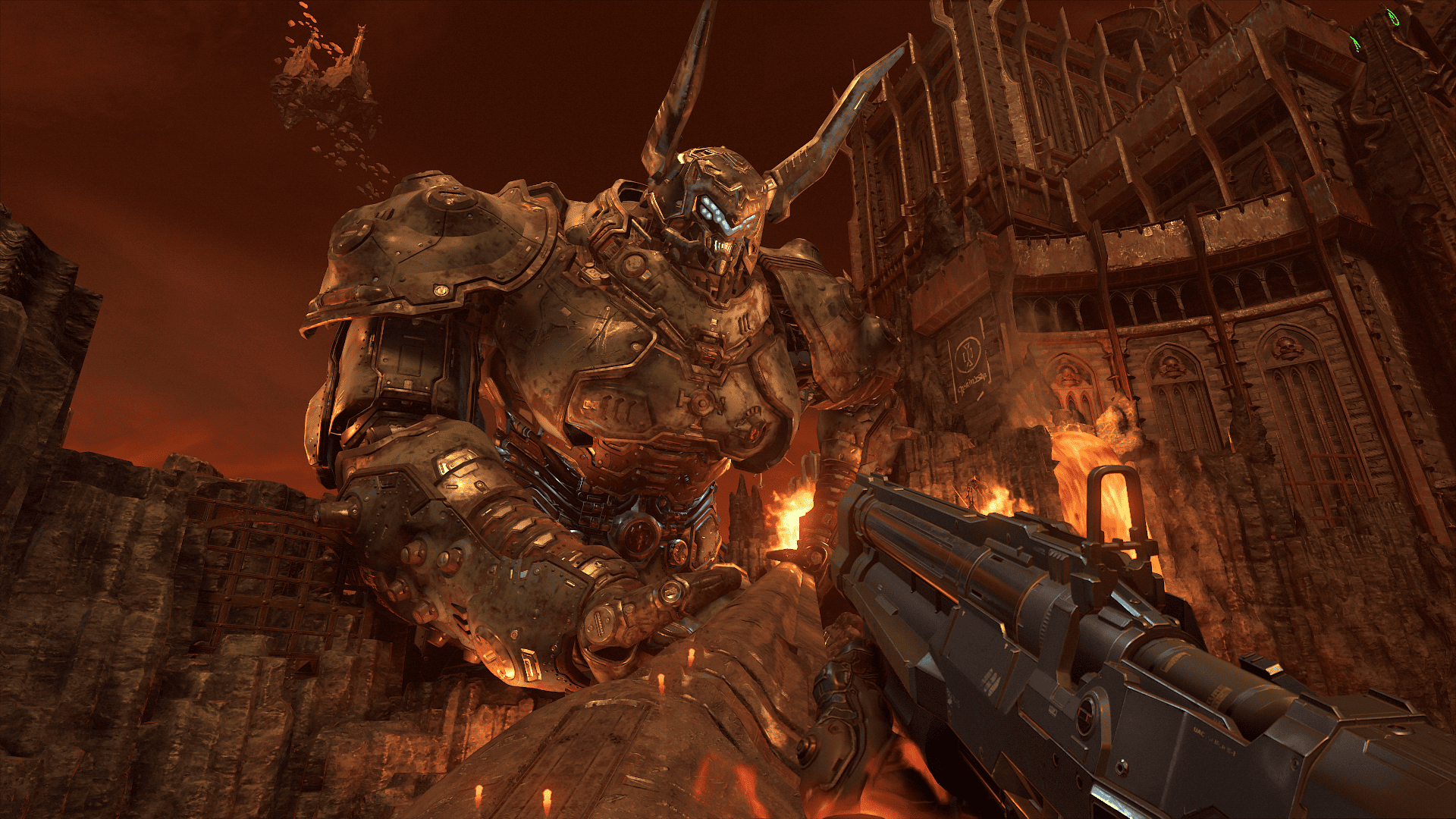
You also need to feel how much damage you did. In Doom Eternal, every hit shows on the enemy — a scar, a torn-off limb, chunks flying (this is called dismemberment, and it’s a form of damage feedback). More realistic games like Counter-Strike use weak points, or hitboxes, where certain body parts take extra damage or kill instantly — hit the head and the enemy drops on the spot.
Designer takeaway: Every hit must produce a reaction — visual, audio, and usually a short hitstop. If the enemy doesn’t answer your attack, the whole conversation breaks.
Timing and readability
This is the hidden half of combat feel, and it’s worth its own section. A fight is really a rhythm of timing windows, and the player can only enjoy it if they can read it.
A few terms that describe this rhythm:
- Telegraph — the little wind-up an enemy shows before it attacks (a raised arm, a flash, a sound). It’s the game warning you, “here it comes.” No telegraph means an attack feels unfair.
- Windup and recovery — the moments before and after an attack when the character is committed and can’t act. Long recovery = risky heavy attack; short recovery = safe light attack.
- I-frames (invincibility frames) — the brief window during a dodge or roll when you can’t be hit. This is what makes a well-timed dodge feel amazing.
- Input buffering — letting the player press the next button slightly early and having the game remember it. Without this, combat feels like it’s ignoring you.
- Animation canceling — cutting one animation short into another, which lets skilled players move faster and express control.
Get these windows right and combat feels fair and responsive. Get them wrong and it feels either sluggish or cheap, even if everything else looks great.
Designer takeaway: Make every attack readable (telegraph it) and every response responsive (buffer inputs, give dodges i-frames). Fairness is a feeling, and timing is where you build it.
Sound: the half people forget
You can have perfect animation and still feel nothing without sound. Audio is half of game feel, and it’s the half that’s easiest to overlook.
A good hit needs a good sound — a crunch, a thud, a metallic clang for a parry. A weak, quiet hit sound makes even a great animation feel limp. Sound also does work you can’t see: a distinct swing sound tells you an attack is coming; a different sound on a critical hit tells you it landed clean; a low “clunk” when you hit armor tells you that weapon isn’t working here. Players learn to fight by ear almost as much as by eye.
Designer takeaway: Give every important action a distinct, punchy sound. If a hit doesn’t sound good, it won’t feel good — no matter how it looks.
Effects and special abilities
Picture this: a zombie slams through a door at you, you have a shotgun, and you blow its head clean off. Messy, right? But it feels great — and that’s the point of effects. Blood, sparks, glowing trails, screen flashes: these are the exclamation points of combat.
Special abilities take it further. You’re swinging a plain samurai sword, and on your finishing blow the katana suddenly becomes a dragon and devours the enemy. For a moment like that to land, two things have to be true. First, the effect has to be timed perfectly with the movement. Second, the player has to earn it — through a button combo, a special weapon, a runic charge, whatever. That requirement is what makes it feel special instead of spammy.
When you give the player these non-ordinary moments, they can feel how far they’ve come in the game — it’s a reward for the players who love it. And it doesn’t have to live only in the endgame. A cool special animation at the start of the game can hook a player right away.
Designer takeaway: Tie big effects to earned moments (combos, charges, finishers) and time them tightly to the animation. An effect that’s always available stops feeling special.

Skill expression: giving mastery somewhere to go
The best combat systems let good players show off. This is called skill expression — the gap between how a beginner plays and how a master plays, and how satisfying it is to climb that gap.
You already saw this in the Mordhau section: chambering, riposting, and feinting are all skill expression. So is animation canceling, so is chaining combos, so is landing a perfect dodge into a counter. The player who practices should be visibly, feel-ably better than the player who mashes buttons. That gap is what turns a game you beat into a game you keep playing.
Designer takeaway: Build at least one mechanic with a high skill ceiling — something simple to start but deep to master — so combat rewards practice instead of ending when the credits roll.
Risk, reward, and difficulty
Combat that never threatens you gets boring fast, and combat that feels unfair makes people quit. The sweet spot is fair risk: the game is hard, but every death feels like your mistake, not the game cheating.
A lot of this comes from the cost of failure. If dying loses you something — progress, currency, a run — every fight carries weight, and winning means more. (Think of how losing your souls in a Soulslike makes you play carefully.) But that cost has to be paired with fairness: readable telegraphs, honest hitboxes, responsive controls. Difficulty should come from the challenge, never from the game feeling broken.
Designer takeaway: Aim for “hard but fair.” Add a real cost to losing, but make sure every death is something the player could have avoided.
The environment is a weapon too
Combat doesn’t only happen between characters — the space is part of the fight. A bush can hide you. An explosive barrel can end a group in one shot, or open up a non-combat route entirely.
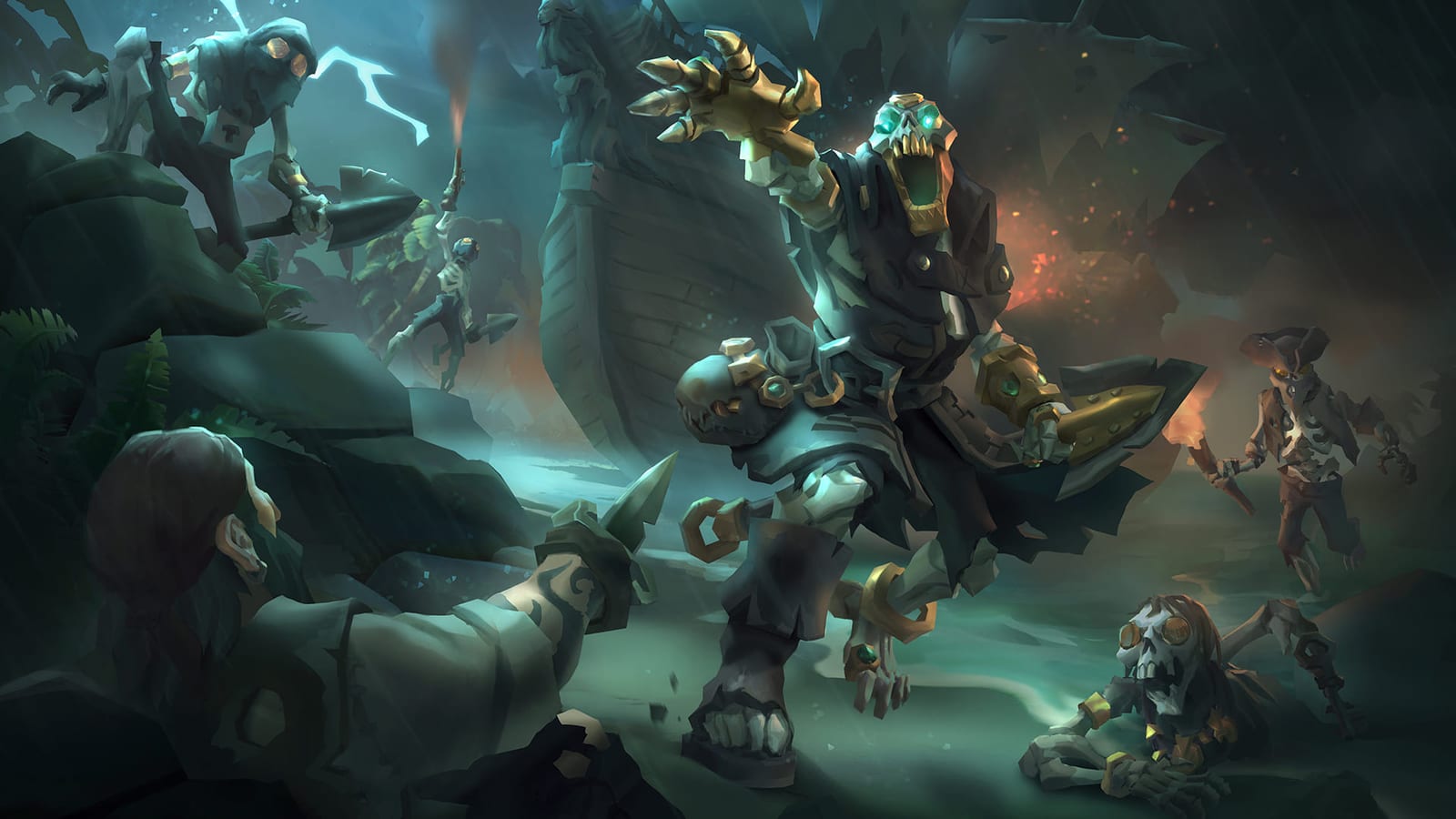
There are tons of examples. In a competitive game like The Finals, you can destroy buildings to open a better firing angle on the enemy team. In The Witcher 3, explosive barrels deal huge damage and can instantly kill. In Sea of Thieves, you’re steering a whole ship with cannons and two harpoons — when you’re winning against another ship and don’t want them to escape, you can harpoon them, pull them close, and chase them down. Out of cannonballs? Grab a floating barrel of them with your grappling hook instead of jumping into the water for it. Easy, and useful.
The point is that a smart environment gives the player options, and options are what make combat feel like a place instead of a stage.
Designer takeaway: Let the environment be part of the toolkit — cover, hazards, destructible spots, tools — so players can solve the same fight in different ways.
When the encounter is a puzzle
Now imagine a co-op shooter (PvE — Player Versus Environment). You and your friends clear a quest section and walk into a boss fight, and no matter what you do, the boss’s health won’t drop. There’s a puzzle to solve. Maybe it’s on the boss itself — a weak spot you have to expose — and you have to figure out which weapon or bullet type to use, or whether you’re supposed to use your fists at all.
Puzzle bosses aren’t for every game, but done right they make an encounter memorable. They turn “shoot until it dies” into “figure out how it dies,” which is a different and often better kind of fun.
Designer takeaway: A puzzle layer can lift a boss fight — but the puzzle has to be readable. Show the player the weak point or the clue, or clever design just becomes frustration.
Result
There are a lot of ways to make combat entertaining, and you don’t have to do all of them. You can focus on one channel and polish it until it shines — but first you have to know what your game is. You don’t need an Elden Ring puzzle boss or Mordhau’s depth. You can combine little things, bit by bit, until the combat becomes yours.
Honestly, that’s how I work: I write down everything I notice while I’m playing a game and having fun, and I build from there. You should try that too. And remember — nothing has to work perfectly. Sometimes combat is buggy and funny, and if players love it that way, don’t rush to fix it. Players can fall in love with the rough edges too. Don’t forget that.
Cover Photo : https://wallhaven.cc/w/13v8p1

-1.jpg)